Director Sun Xun spent ten years making one animated film using paint, wood, and ink
The Singapore-made 'Magic Atlas' relies on physical materials rather than digital tools to tell a surreal story about a coal empire.
By Anthony Lawson ·
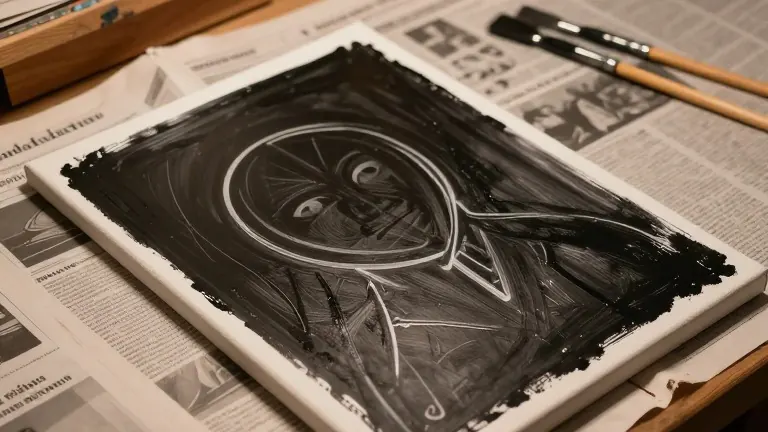
Director Sun Xun spent the last decade creating a single animated feature using physical materials like paint, wood, and newspaper instead of digital software. The film, titled "Magic Atlas," was produced in Singapore by Pi Animation Studio. It presents a story about a coal empire called Luocha, which is ruled by fascist industrialists.
The production process involved a wide range of tangible techniques. Sun utilized pen and ink on paper, canvas, and woodcut methods. The director stated that the goal was to bring texture and human feeling to the screen. This approach stands in contrast to the current animation industry, which is increasingly focused on artificial intelligence questions.
The narrative follows an orphan boy named Xiao Zhi. He gains access to the state's secrets through an imprisoned magician. The magician was jailed for returning stolen memories to the citizens. The government had taken these memories to maintain control over the population. The plot takes a back seat to the visual experimentation in the film.
The movie opens with a recitation from the Avatamsaka Sutra. A narrator, voiced by Sun, claims to be everywhere and have no beginning or end. The visual style shifts rapidly throughout the runtime. Scenes alternate between aged pages, black ink backgrounds, and blue water. Hybrid animals, including a horse with a camera for a head, appear in these sequences.
The art style constantly changes to match the mood. Monochrome palettes with heavy black shading give way to broad, impressionistic brushstrokes. At other times, the film uses bright colors and Western painting styles. This fluctuation mirrors the themes of control and freedom explored in the story. A factory aggressively juts out from a gently painted mountain landscape in one key scene.
The story includes specific political allegories. Generals in the film declare that a character has practiced criminally outmoded thinking. They charge the character with possessing false memories. These are memories the government does not permit people to keep. The film also features a mass surveillance system made of giant mosquitoes.
Sun explained that a standout sequence was created during the isolation of the Covid-19 pandemic. This part of the film resulted from an international collaboration of artists. The director has said he is not concerned if every viewer understands all the symbols in the picture. The technical variety of the film prevents it from feeling entirely alienating to audiences.
The film explores the idea of pacification through the co-option of art. During a festival scene, a man wears a mouse costume with a silhouette resembling Mickey Mouse. The story becomes metaphysical as it progresses. It pokes fun at its own created world while maintaining a strong visual identity.