Ireland Rugby Shifts to Faster Attack After Argentina Win
New Zealand coach Michael Cheika’s influence is visible in Ireland’s move toward quicker ball movement and looser structures, a change tested by Friday’s 42-12 victory over Argentina.
By Rafael Bailey ·
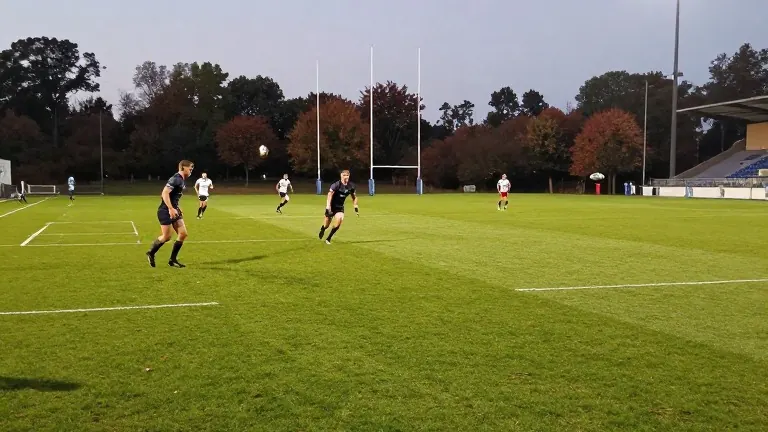
Ireland’s rugby strategy is changing to prioritize speed and precision over physicality. Following a 42-12 victory over Argentina on Friday, the national team displayed a more fluid attacking style that relies on rapid passing and early ball release. This shift marks a departure from previous seasons and places a higher premium on individual technical skill.
The move toward faster ball circulation is not limited to the national side. Provincial teams including Ulster, Connacht, Munster, and Leinster are adopting similar methods. Leinster, under new head coach Michael Cheika, has already integrated these principles, while other regions are emphasizing execution to compensate for squad depth. The national team appears to be loosening its structural rigidity, a change that increases pressure on players to deliver accurate passes under defensive pressure.
The performance against Argentina offered a clear demonstration of this new approach. The team’s kicking game showed greater nuance, with players like Craig Casey and Sam Prendergast using the boot to shift momentum when attacks stalled. Chasers Robert Baloucoune and Mack Hansen contested effectively, allowing the team to manage the game as it progressed. Argentina, despite fielding a strong lineup, struggled with cohesion and discipline, which allowed Ireland to build a lead without forcing unnecessary risks.
Wing Hugo Keenan emerged as a central figure in this evolving attack. Previously valued for defensive work rate and backfield coverage, Keenan is now being utilized in try-scoring positions that reward his running lines and offloading ability. His performance drew comparisons to former All Black Christian Cullen, who similarly excelled by looking for the extra pass at critical moments. Keenan’s adaptability to a looser game has expanded his role from defensive glue to an offensive threat.
Forward involvement in the attack is also increasing. Tadhg Beirne displayed acute awareness in positioning, while Joe McCarthy and Tadhg Furlong focused on short passing to gain ground rather than seeking physical contact. Ryan Baird provided a crucial scoring pass to Keenan, illustrating how forward vision can create opportunities in the backline. However, the team must improve ball placement at rucks to maintain speed, as perfect positioning at the breakdown saves time that can be used for attacking runs.
The next match presents a different challenge. Fiji, currently coached by Jake White, offers a threat through broken-field running and ball-in-hand skill that exceeds the danger posed by Argentina. While Fiji may concede penalties due to indiscipline, their ability to score tries in open play requires Ireland to manage the game more astutely. With rotation likely due to injuries, the focus will be on securing a result that positions the team favorably ahead of a trip to South Africa.