Marine Returns to Work With Service Dog
A St. Louis veteran uses a trained Goldendoodle to manage physical disabilities and emotional health while preparing for a new school year.
By Rafael Bailey ·
James Poggi spent his career in the Marine Corps aviation sector. The job left him with five back surgeries and a below-the-knee amputation. He now relies on a Goldendoodle named Teddy to perform daily tasks that restore his independence in St. Louis.
Poggi described the physical shift from a 250-pound active service member to someone dependent on wheelchairs and walkers. He attributed his condition to multiple accidents, hard landings, physical therapy injuries, a car crash, and spinal meningitis. All of these issues developed while he was still on active duty.
His wife, who serves as his caregiver, suggested getting a service dog to help manage the emotional toll of his injuries. Teddy now assists Poggi with retrieving dropped keys, carrying items, and fetching his cell phone. Poggi compares the dog to a battle buddy who is always ready to support him.
Teddy was trained at Dog Training Elite St. Louis. The facility prepares animals for real-world scenarios rather than just basic obedience. Matt Willis, the owner, said the training helps veterans manage both physical limitations and post-traumatic stress disorder. He noted that the interaction with the dog causes chemical changes in the body that provide a necessary uplift.
Willis acknowledged that gaps exist in the care provided by the government and the system for veterans. To address part of this need, the facility received a private donor grant. This funding covers 30% of the training costs for 10 active military members or veterans in need.
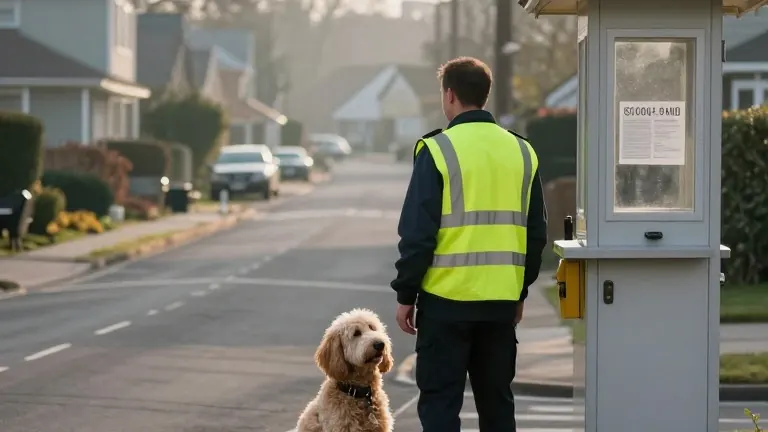
Poggi plans to resume his job as a school crossing guard in Mascoutah for the next school year. He intends to work full-time on the corner in all weather conditions. Teddy will accompany him, utilizing a small crossing guard hut at the location.
Data suggests a high demand for this type of assistance. A 2024 survey of approximately 600 veterans found that about 40% had never used a service dog for PTSD but expressed interest in one. A separate 2024 study linked service canines to lower rates of anxiety and depression in veterans with PTSD.
The Department of Veterans Affairs does not currently provide service dogs for mental health conditions, including PTSD. The agency is still studying the potential benefits of these interventions. Poggi views Teddy as a vital part of his family, ranking the dog alongside his children in terms of emotional significance.