Auto Industry Economics: Material Costs Threaten Profit Margins
GM and Ford project a combined $4 billion hit from tariffs, diesel, and chip prices, even as truck sales remain strong.
By Rafael Bailey ·
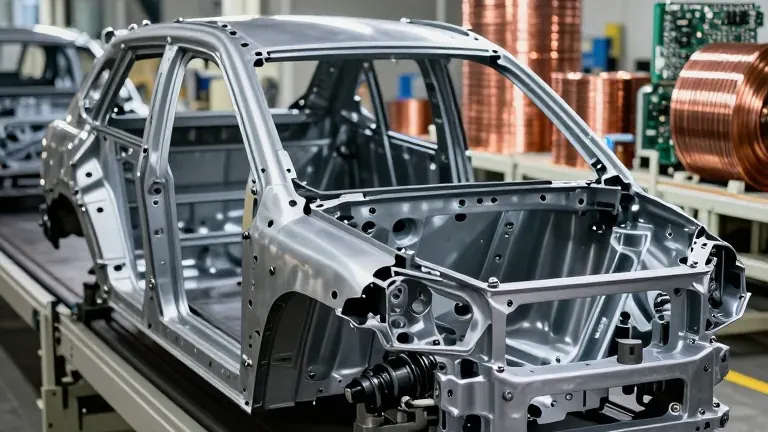
General Motors and Ford expect to lose $2 billion each this year due to rising costs for steel, copper, diesel fuel, and computer chips. The two companies issued these estimates during third-quarter earnings calls held in late October. Despite the expense surge, both automakers reported that overall revenues increased year over year.
Consumer demand for large vehicles remains the primary driver of current profits. General Motors stated that light-duty truck sales rose 9% in the past year. Stellantis reported a 34% increase in U.S. pickup sales. Ford’s F-Series continues to lead its sales charts. Kelley Blue Book data shows the average new vehicle transaction price reached just over $50,000 in September, a near-record high. Sherry Ann House, Ford’s chief financial officer, attributed this resilience to customers continuing to buy despite higher fuel prices and interest rates.
The primary headwind comes from the cost of inputs required to build and ship these vehicles. Since 2025, tariffs on imported steel, aluminum, and copper have raised the price of basic materials. Copper costs have also climbed due to global demand for electric vehicle batteries and data center infrastructure. Computer memory chips face similar pressure from tight supply chains and demand from the artificial intelligence sector.
Logistics expenses add to the burden. The average price of diesel fuel has hovered near $6.35 per gallon, close to its all-time high, according to AAA. This impacts the cost of shipping parts across the U.S.-Canada border and moving finished vehicles to dealerships. Paul Jacobson, GM’s chief financial officer, noted that maintaining current material prices makes financial planning for next year more difficult.
General Motors forecasts that material costs, including chips and diesel, will reduce its profit by up to $2 billion this year. The company is also paying approximately $2.5 billion in tariff costs, a figure lower than earlier projections due to refunds. Ford’s chief executive Jim Farley cited a similar year-over-year headwind of about $2 billion from commodities, memory, and logistics. Both executives stated that growth in software services and parts sales helps offset these material losses.
The end of the $7,500 federal electric vehicle tax credit on September 30, 2025, has altered the market structure. EV sales dropped nationally after the credit expired. Tesla, which produces only electric vehicles, saw global sales decline during the quarter. General Motors reported a 6% drop in overall sales, citing the smaller EV market. Jacobson said GM is right-sizing its electric production capacity to align with current demand levels.
Hybrid vehicles are gaining traction as an alternative to full electric models. Edmunds data shows hybrid sales increased 27% in the past year. American shoppers are choosing hybrids in response to high fuel prices. Sam Fiorani, a vice president at Auto Forecast Solutions, expects the Detroit automakers to offer more hybrid models in coming years because the transition to fully electric vehicles is proceeding slower than initially planned.
Tesla has reclaimed a majority share of the U.S. electric vehicle market. According to Edmunds, nearly 52% of new EV sales in the U.S. this year have been Teslas. Ivan Drury, director of industry insights at Edmunds, suggested that buyers default to Tesla as a known brand while other automakers adjust their product lines. Elon Musk stated on Tesla’s earnings call that the company is focusing on robotaxis and humanoid robots, with capital expenditures nearly doubling from this time last year.
Musk also discussed a potential merger between Tesla and SpaceX on a separate earnings call. He said special committees at both companies are discussing the idea and that he believes it would be a good outcome for shareholders. The proposal would combine Tesla’s automotive business with SpaceX’s portfolio, which includes Starlink satellites and the Grok AI chatbot. Stellantis executives indicated they would provide further details on their own cost impacts in the fourth quarter.
More Business · Consumer Watch · Report a business · Got a Story?