Chicago Water Utility Pilots 1.7 Million Gallon Underground Storage System
The department is testing new stormwater infrastructure on the West Side to combat intense rainfall while continuing the massive lead service line replacement effort.
By Carlos Rousseau ·
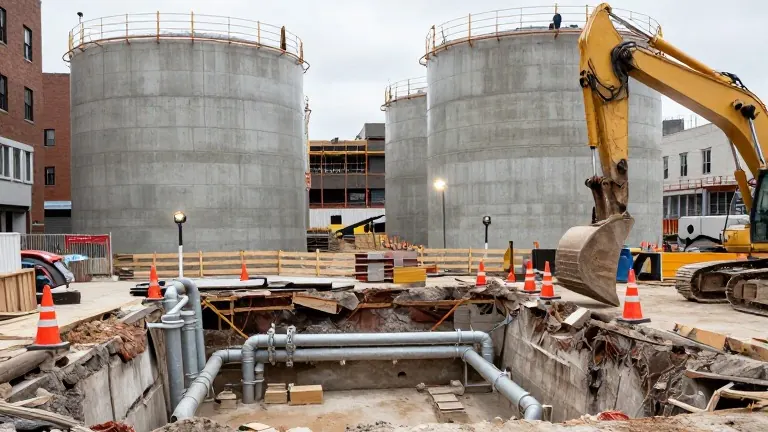
The Chicago Department of Water Management is testing a new underground storage system to handle the city's increasingly intense rainfall. Commissioner Randy Conner announced that the utility is piloting underground storage units on the West Side in partnership with the Metropolitan Water Reclamation District of Greater Chicago. The combined projects will provide nearly 1.7 million gallons of additional stormwater storage. This capacity allows the system to hold runoff temporarily, giving local sewers more room to process water before it overflows.
Conner noted that the department faces a dual challenge of managing modern weather patterns and maintaining aging infrastructure. The heavy rain this summer exposed the limits of the existing sewer network. When those systems are overwhelmed, the results include flooded streets, basement backups, and property damage. The utility aims to use these new storage methods to reduce that strain.
The department is also continuing its historic effort to replace lead service lines. Conner described this as a critical public health priority and one of the city's largest infrastructure projects. Replacing these lines requires the utility to change how it plans construction and trains its workforce. The department must manage these replacements alongside routine maintenance without seeking significant additional funding.
Conner stated that the utility cannot choose between maintaining the current system and replacing lead lines. It must do both. The strategy involves incorporating lead line replacements into existing capital improvement projects. This approach allows the department to advance the work efficiently and equitably using available funding.
The commissioner emphasized that a modern water utility must adapt to changing conditions. The department is rethinking its operations to meet these new demands. This includes expanding its engineering toolbox and forming partnerships with other agencies. The goal is to solve problems more effectively while maintaining the high-quality drinking water Chicagoans depend on.
The work involves maintaining the system the city inherited while building the infrastructure the city needs. Conner said this requires strong partnerships and investment in the workforce. The department is testing new approaches in neighborhoods across Chicago. The responsibility is to improve the system for the next generation while keeping current services running.