Northwestern physicists trap single positron for months
Researchers at the University of Chicago and Northwestern University have captured a single particle of antimatter, allowing them to study it in a controlled quantum state.
By Rafael Bailey ·
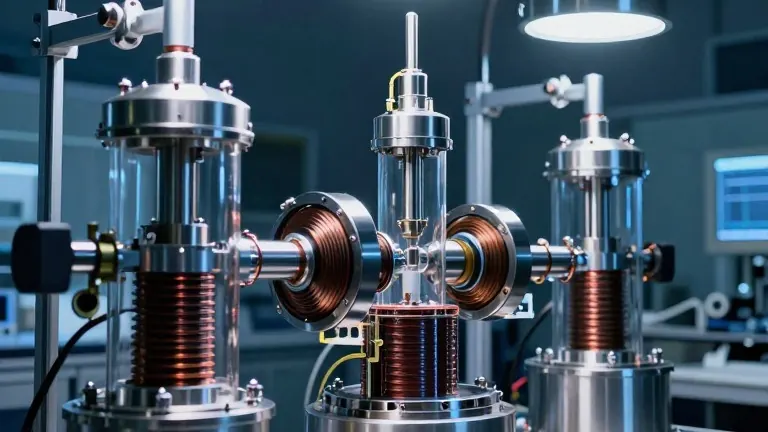
Northwestern University physicists have successfully captured a single positron, a particle of antimatter that is the counterpart to the electron. The team used electric and magnetic fields to trap, freeze, and store the particle. This experiment, published in the journal Physical Review Letters earlier this month, allowed the scientists to study the antimatter in a controlled quantum state for months.
The discovery could test a long-standing theory regarding the formation of the universe. Gerald Gabrielse, the study’s lead author and director of Northwestern’s Center for Fundamental Physics, noted that the Big Bang should have created equal amounts of matter and antimatter. If that were true, the two would have annihilated each other, leaving nothing behind. Gabrielse stated that there is clearly something wrong with that theory, and the team is trying to figure out why matter remains.
Matter consists of electrons, protons, and neutrons. Each of these particles has a twin antimatter particle with the opposite electrical charge. A positron carries a positive charge, while an electron carries a negative charge. When matter and antimatter touch, they annihilate each other, disappearing and turning into energy.
The University of Chicago’s Art Institute is also hosting a fall exhibition featuring the work of impressionist painter Mary Cassatt. The show focuses on a three-panel mural Cassatt created for the 1893 World’s Fair in Chicago. The piece, titled “Modern Woman,” was commissioned for the fair’s Woman’s Building, which was spearheaded by Chicago philanthropist Bertha Palmer.
The mural itself is missing. After the fair ended, the artwork went into storage and was never seen again. Curator Annelise Madsen said the last known location of the piece was 1912 in Chicago, after which the paper trail ends. One objective of the exhibition is to piece together that story and bring it back to life for visitors. Madsen described the mural as an important part of Chicago history.
The Metropolitan Water Reclamation District of Greater Chicago operates a sewage pumping station on Racine Avenue south of the Bridgeport Art Center. The station moves sewer water to a treatment facility. However, heavy rains sometimes require the district to dump untreated sewage directly into the river to prevent flooding of homes. This year, the Racine station has dumped more than 10 billion gallons of sewage into the river, which is more than it has dumped since 2019.
The contamination poses a health risk for people with weak immune systems due to bacteria and other pathogens in the water. It also disrupts local ecosystems, potentially wiping out fish populations for weeks. Joe Gamble, who works at the Chicago Maritime Museum, said the smell of the area sometimes clings to his clothes even after he has left the site.
In the Lake View neighborhood, The Brewster building sits on a site historically considered haunted. The 19th-century structure is best known as the home of the doll Chucky from the “Child’s Play” film series. Before the movie, people described sensations of falling inside the building, following the death of the developer who fell through an eight-story atrium.