Democrats Seize Congress and Ohio Senate Seat, Redrawing the Great Lakes Map
Voters in the region rejected the party in power, flipping key Senate seats and shifting state legislatures to the opposition in a decisive midterm sweep.
By Carlos Rousseau ·
The 2026 midterm elections delivered a decisive shift in power for the Great Lakes and Ohio Valley, with Democrats taking control of the U.S. Senate and House of Representatives while also flipping several key state offices in the region. Seven U.S. Senate seats changed party hands, including critical victories in Ohio, Michigan, and Kentucky. In Ohio, Democrats gained control of the open Senate seat previously held by Republicans, while in Michigan, Abdul El-Sayed won the open seat, becoming the first Muslim elected to the chamber. In Kentucky, Andy Barr won the open Senate seat, allowing Republicans to hold that particular district. These results mark a significant departure from the previous cycle, as Republicans lost their majority in both chambers of Congress.
This shift represents the biggest single-election change of partisan power in state governments since 2010. In the region, Democrats won or retained full control of both chambers of the state legislatures in Michigan and Ohio. In Michigan, the party secured a trifecta, maintaining the governor's office while winning both legislative chambers. In Ohio, Democrats also achieved a trifecta, winning the governor's race in an open seat and taking control of both legislative chambers. This outcome breaks a long-standing Republican hold on the Ohio governor's office and ends a period of divided control in the state legislature. The AP notes that these wins put pressure on the new majority to address voter concerns about the rising cost of living, high gas prices, and inflation.
Voter dissatisfaction with the current administration and the economy was a primary driver of the results. The AP Voter Poll indicated that about six in ten voters disapproved of how President Donald Trump was handling the presidency. In Ohio, Iowa, Maine, and North Carolina, majorities of voters said the Republican Senate candidates were too supportive of the president. This sentiment was particularly strong in the Great Lakes region, where economic anxieties over the cost of groceries and utilities dominated the campaign. Heather Williams, president of the Democratic Legislative Campaign Committee, stated that the party won historic levels of power in statehouses, noting that they had not flipped this many seats nationwide since the 1980s. She emphasized that the mandate is about kitchen-table issues and economic opportunities for middle-class voters.
The redistricting efforts that Republicans hoped would secure an advantage in the region largely failed to materialize. Republicans in Ohio had hoped to net two additional House seats through redistricting, but Democrats instead gained ground. In Michigan, Democrats flipped multiple House seats, including District 4 and District 7, defeating incumbent Republicans Bill Huizenga and Tom Barrett. These were official calls, marking a significant Democratic gain in the state. The Republican redistricting plan was systematically dismantled, with voters choosing to elect a new Democratic majority. Former Attorney General Eric Holder, chair of the National Democratic Redistricting Committee, stated that voters used the opportunity to reshape the map in their favor, particularly in states where the lines had been drawn to benefit the Republican party.
In the House of Representatives, Democrats won a substantial majority, with 233 seats called for their party and 138 for Republicans. This gives Democrats a net gain of 30 seats, securing a strong majority in the lower chamber. Hakeem Jeffries, the House Democratic Leader, said the new majority is ready to deliver on the dramatic change voters demanded. He pledged to focus on lowering the costs of gas and groceries and to launch a robust oversight agenda to hold the administration accountable. House Speaker Mike Johnson will not seek reelection as House Republican leader, signaling a new era of leadership in the chamber. The new Congress will be sworn in on January 3, 2027, and is expected to immediately begin work on a 100-day agenda focused on economic relief.
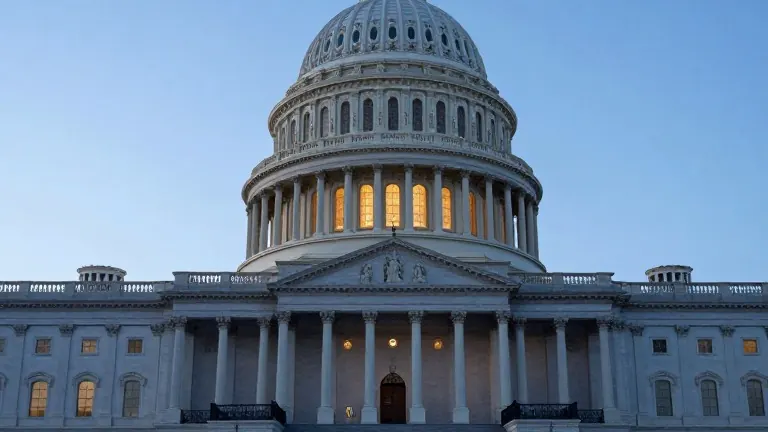
The Senate results also reflect a broader national trend of Democratic gains in traditionally Republican states. Democrats won seats in South Carolina and Kansas, states that had not elected a Democratic senator since 1932. In the Great Lakes region, the flip of the Ohio and Michigan Senate seats was pivotal in securing the Democratic majority. Democrats won 20 Senate seats to 13 for Republicans, with two seats remaining uncalled. This outcome ends the Republican hold on the Senate that had been in place since 2024. The results present a fundamental reshaping of power in Washington, with Congress poised to reassert itself as a coequal branch ready to challenge the president's agenda. The new Senate majority will have the power to confirm nominees and pass legislation with a higher degree of certainty.
State-level results in the region further underscore the shift in power. In Michigan, the Democratic trifecta allows for significant policy changes in areas such as education funding and healthcare access. Newly elected governors in the region, including those in Wisconsin and Minnesota, said they wanted to work with Republicans to move the states forward. Amy Klobuchar, the newly elected governor of Minnesota, warned her supporters that she might not do everything they like, but emphasized her goal of moving the state forward. In Ohio, the new Democratic governor and legislative majority will have the ability to override vetoes and pass bills with less resistance from the opposition party. This change in state government dynamics is expected to have a significant impact on local policies, including tax rates and school choice.