Israeli exit polls show deadlock as Netanyahu and Eisenkot blocs miss 61-seat mark
Turnout hit a record high since 1973, but neither the governing coalition nor the opposition projected enough seats to form a stable majority.
By Carlos Rousseau ·
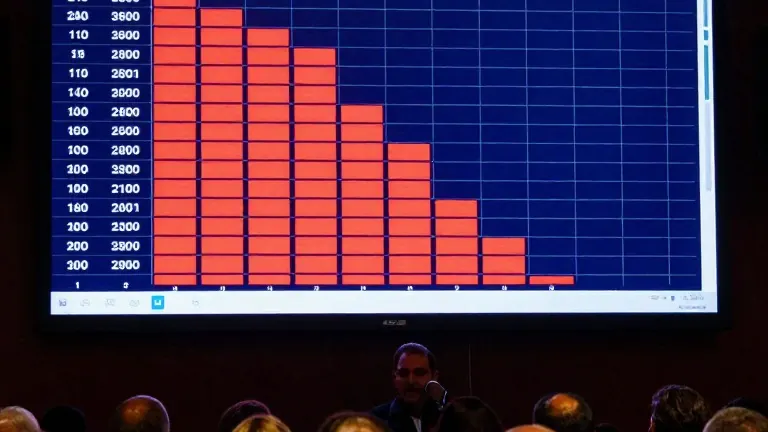
Exit polls released on Tuesday night by Channels 11, 12, and 13 indicate that Israel’s election has produced a fragmented result with no clear winner. Prime Minister Benjamin Netanyahu’s bloc and the opposition camp led by Gadi Eisenkot both appear to fall short of the 61 seats required for a majority in the Knesset.
The data from the three broadcasters shows the opposition bloc, which includes Yashar, B’Yachad, Yisrael Beytenu, and the Democrats, projected to win between 50 and 53 seats. Netanyahu’s bloc is expected to secure approximately 50 seats. This near-parity leaves both sides without a straightforward path to governing power.
Likud, Netanyahu’s party, is projected to remain the largest single party with 24 to 25 seats. Eisenkot’s Yashar party is estimated to capture 21 to 23 seats. Naftali Bennett’s B’Yachad is expected to be the third-largest force in the opposition, with 12 to 14 seats. Avigdor Liberman’s Yisrael Beytenu and Yair Golan’s Democrats are projected to win 7 to 9 seats and 9 to 10 seats, respectively.
On the right, small parties near the 3.25 percent threshold are expected to fail to enter the Knesset. Ofer Winter’s People of Israel and Yoaz Hendel’s The Reservists-Economic party both appear to fall below the cutoff. This loss may further limit Netanyahu’s options for building a coalition.
Voter turnout reached its highest level since records began in 1973, according to the Central Elections Committee. The Joint List and Ra’am are projected to win a combined 17 to 18 seats. While this number could make Arab parties pivotal to coalition talks, most opposition leaders have ruled out governing with them, excluding the Democrats.
A unity government between Netanyahu and Eisenkot appears unlikely as Eisenkot has rejected serving under the prime minister, even in a rotation setup. Other opposition figures have also declined to join a Netanyahu-led coalition. A minority government is a possibility, though reliance on Arab parties for a confidence vote may face internal resistance within the opposition bloc.
In the Netanyahu bloc, Itamar Ben-Gvir’s Otzma Yehudit is projected to win 6 to 7 seats. Bezalel Smotrich’s Religious Zionist Party-Zehut is expected to win 6 seats. The ultra-Orthodox parties Shas and United Torah Judaism are projected to receive a combined 12 to 13 seats, with Shas winning 6 and UTJ winning 6 to 7.