Israeli strike in al-Tiri kills veteran reporter, leaves photojournalist trapped under rubble
A second missile and subsequent drone attacks in southern Lebanon claimed the life of Amal Khalil while Zeinab Faraj survived hours beneath the debris.
By Carlos Rousseau ·
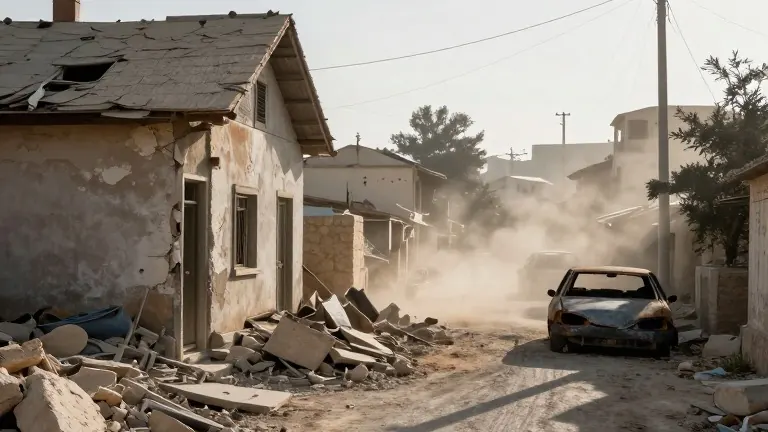
An Israeli military strike in the Lebanese village of al-Tiri on April 22 killed veteran reporter Amal Khalil and left photojournalist Zeinab Faraj trapped under rubble for hours. The attack occurred one month after a ceasefire agreement ended a month of deadly airstrikes across the country. Both women were documenting the aftermath of the war when the first missile hit the vehicle ahead of them, killing municipal official Ali Nabil Bazzi and Mohammed Hourani.
Khalil, 42, and Faraj, 21, sought shelter in a nearby house after the initial impact. As drones circled overhead, they attempted to return to their car to flee. A second missile struck the vehicle, throwing both women backward. Faraj crawled to a vantage point to watch the road while Khalil remained still, injured and bleeding. Faraj sent a final message to her sister, "There is no hope left. Forgive me," before her phone died.
A paramedic reached the scene approximately one hour before Khalil died. The rescuer found Faraj crushed beneath a large weight of rubble. She described the sensation as something pushing down on her body, making it difficult to breathe. The paramedic held her shoulders while a second worker cleared the debris. Faraj was pulled free as another drone dropped a stun grenade nearby. She was transported to a hospital where nurses confirmed Khalil had died.
The Israeli military stated the strike targeted saboteurs violating the ceasefire. Human rights groups labeled the incident a war crime. The military received messages urging them to allow a rescue operation while the two women sheltered in the building. A week prior to the attack, an Israeli spokesperson had described a video of Khalil as "terrorist media," and the reporter had received death threats from Israeli numbers.
Faraj is now preparing to return to university after finishing her radio and television degree. She still struggles to walk and has visible injuries to her hand and face. A limp has altered her daily movements, making simple tasks like climbing stairs difficult. She wakes at night screaming, reacting to the sound of drones and warplanes as if a missile is about to strike. Faraj remains haunted by the image of Hourani lying on the ground after the first attack, his eyes open and looking at her.