Johnson's France warning rings hollow as Democrats sweep the House and Senate
Speaker Mike Johnson predicted chaos and a hostage-taking by the DSA, but the Associated Press reports Democrats have captured both chambers, ending the GOP's three-year legislative run.
By Anthony Lawson ·
The election results are in, and the warnings delivered by former Speaker Mike Johnson in his final days of Republican control have been tested against the new political reality. In a USA Today op-ed published on October 30, Johnson argued that a Democratic House would be held hostage by the Democratic Socialists of America. He pointed to France as a dark harbinger of what could happen in the United States if Democrats took power. Johnson described the violent riots in France, including the smashing of buildings and the torching of a historic town hall in Limoges, as the inevitable result of decades of misguided policy. He cited lax immigration, suffocating regulation, and debt reaching 119 percent of GDP as key factors in the French crisis. According to Johnson, the chaos unfolding in France was a preview of the path the United States would follow under a Democratic majority.
Johnson reinforced these points during interviews on Fox News. In a segment with Laura Ingraham, he stated that if Democrats took control, it would be chaos every day for two years in the next Congress. He noted that party strategist James Carville admitted he would prefer Republicans keep the House rather than see Democrats win by five seats because the party would be a hostage to the DSA. Johnson argued that the Democrats were being transparent about their agenda, which included abolishing borders, defunding the police, and putting men back in women's sports. He described the incoming Democratic leadership as further left than previous progressive groups, suggesting voters should see a clear contrast between common sense and what he called absolute crazy.
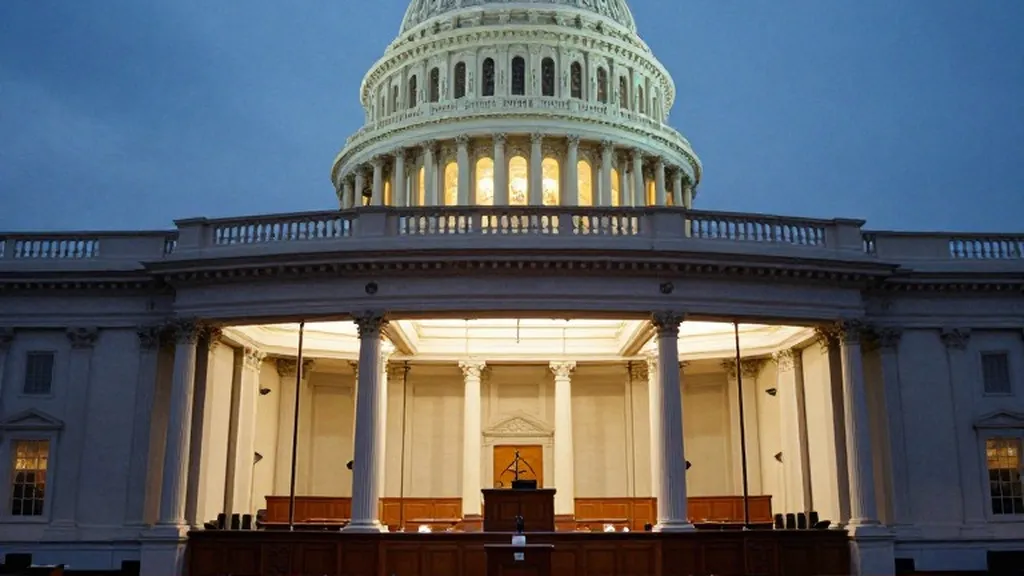
Despite these predictions of instability, the Associated Press reports that Democrats have won control of both the U.S. House and the Senate. The party has secured a 238 seat majority in the House, a net gain of 33 seats, and a 20 to 13 lead in the Senate, with seven seats changing party control. This result marks a decisive shift in power, ending the Republican majority that Johnson led for three years. The Associated Press notes that the Democratic victory was powered by voter dissatisfaction with the economy, the war in Iran, and perceptions of government corruption. The new Democratic leadership, including Hakeem Jeffries who is in line to become House speaker, has already begun outlining an oversight agenda focused on the Trump administration.
During his tenure, Johnson and the Republican majority highlighted a record of legislative achievements. According to the Speaker's office, House Republicans delivered 4.6 trillion dollars in lower taxes, the largest middle-class tax cut in history. They also claimed a 1.6 trillion dollar reduction in wasteful government spending and a secured border. The Republican leadership emphasized that they passed these measures despite navigating one of the smallest House majorities in history. They noted that Democrats had forced three government shutdowns, including the longest in U.S. history, yet Republicans still managed to pass significant legislation. This included the Working Families Tax Cuts, which provided an average 10,900 dollar boost in take-home pay for a family of four, and the first-ever nationwide school choice program.
Conservative leaders praised Johnson's ability to deliver results under difficult circumstances. Former Speaker Newt Gingrich stated that Johnson inherited a divided conference and created a record for legislative effectiveness that is historic. Kevin Roberts of the Heritage Foundation called Johnson a true statesman who delivered consequential conservative policy victories through slim majorities. Grover Norquist of Americans for Tax Reform highlighted Johnson's success in making the Trump Tax Cuts permanent, a task that previous Republican majorities had not completed. These endorsements served as a final defense of the GOP's record as the party prepared to cede control of the chamber to the Democrats.
Johnson's campaign strategy focused heavily on this record of delivery. In a Fox News interview from Cincinnati, Ohio, he stated that he had been traveling nonstop to more than 40 districts across 22 states in the final month of the campaign. He argued that the American people were looking at record over rhetoric, noting that Republicans had brought down costs and cut taxes. He contrasted this with the Democratic platform, which he described as an insurgent far-left agenda. Johnson believed that the polls were underestimating Republican enthusiasm, but the final results from the Associated Press indicate a strong Democratic turnout that overwhelmed those expectations. The new House majority is now set to take office on January 3, 2027, bringing Johnson's two-year warning of daily chaos into focus.
The Democratic victory in the Great Lakes and Ohio Valley states was particularly significant. In Ohio, the Associated Press reports that Democrats gained control of the U.S. Senate seat previously held by Vice President J.D. Vance. This was a special election to fill the remainder of his term. In Michigan, Abdul El-Sayed won the Senate seat, becoming the first Muslim American U.S. senator. He addressed Vice President J.D. Vance in his victory speech, calling him habibi, a term of affection. The win in Michigan was part of a broader wave that saw Democrats flip several key districts in the region. In Kentucky and West Virginia, Republicans retained their Senate seats, with Shelley Moore Capito winning re-election in West Virginia. However, the overall national trend favored Democrats, who won 238 House seats compared to the 219 held by Republicans before the election.