Midterm Results Will Take Days to Finalize as States Manage Complex Counting
Voters across the U.S. are casting ballots for the 2026 midterms, but the official certification of winners will lag behind media projections due to state-specific rules and logistics.
By Anthony Lawson ·
Tens of millions of Americans are voting in the 2026 midterm elections, but the public may wait days or even weeks to know which party controls Congress for the rest of President Donald Trump’s second term. The speed at which results appear depends entirely on the individual states, which the U.S. Constitution allows to set their own rules for holding elections and counting ballots.
While some races may be called on Tuesday night, tighter contests will require more time. Mitchell Brown, a political science professor at Auburn University and author of “How We Vote: Innovations in American Elections,” notes that differences in process, deadlines, geography, and voter demographics create a patchwork of timelines. She estimates it could take up to 30 days for all states to certify their results.
A key distinction exists between official state certifications and media projections. Chris Mann, research director at The Center for Election Innovation & Research, explains that calls made by news outlets on election night are predictions, not final results. In close elections, the winner may not be confirmed until the official certification process is complete.
Polls close at different times across the country, mostly between 7 p.m. and 8 p.m. local time. This spreads the voting window over several hours due to time zones. For example, polls in Georgia, Indiana, Kentucky, South Carolina, Vermont, and Virginia close at 7 p.m. Eastern Standard Time, while California, Idaho, Oregon, and Washington state close at 11 p.m. EST. Alaska is the last to close at 1 a.m. EST.
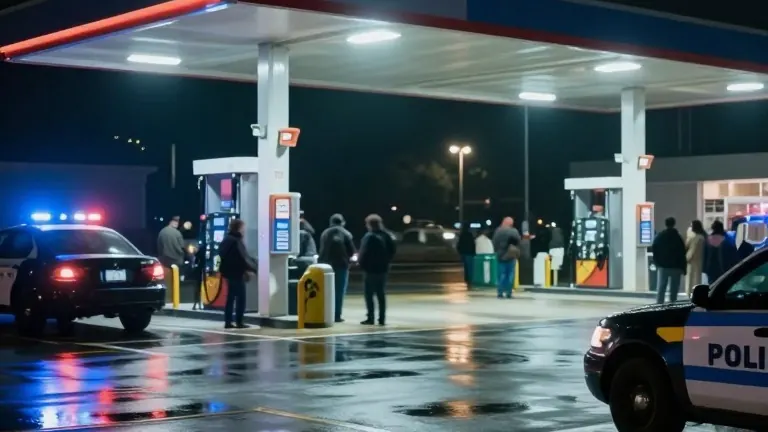
Some states are experiencing minor delays. North Carolina extended voting hours in some precincts after resolving technical issues. In Pennsylvania, three precincts in Chester County are staying open until 8:30 p.m. EST due to machine set-up problems that delayed their opening. These local adjustments add complexity to the overall timeline.
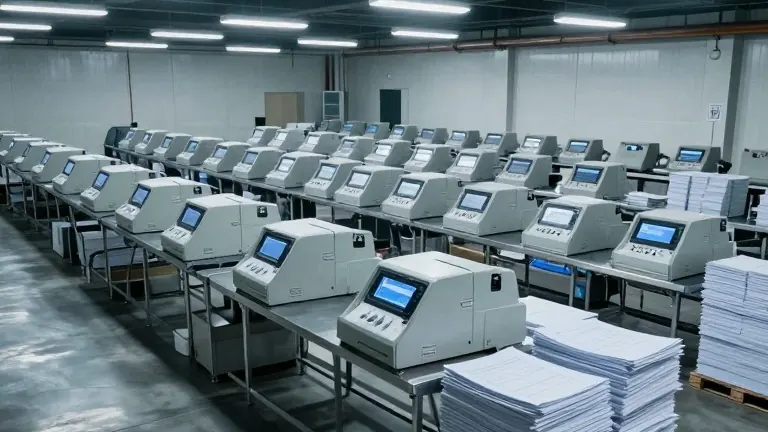
Once polls close, states must count various types of ballots, including in-person, mail-in, and provisional votes. Provisional ballots allow voters to cast votes if their eligibility needs verification. Brown describes the process of confirming these votes as “curing,” which can extend the tallying period. Fourteen states and Washington, D.C., also count ballots postmarked by Election Day if they arrive within a set window, adding to the volume of work.
Physical geography impacts counting speed. Wren Orey, who runs the Elections Project at the Bipartisan Policy Center, points out that in remote areas like Alaska, ballots are sometimes flown to Anchorage for processing. States with more counting infrastructure, such as additional machines and staff, generally process votes faster. Orey notes that media projections rely on margins of victory; high margins allow for quicker calls, while narrow margins require more data before a winner can be projected.
Voting methods also affect the timeline. Alaska and Maine use ranked-choice voting, which Mann describes as a “more complicated process” in tight races. If no candidate achieves a majority, the lowest candidate is dropped, and the count repeats. This can require multiple rounds of counting. Conversely, Wisconsin and Pennsylvania wait until Election Day to prepare mailed ballots for scanning, meaning hundreds of thousands of ballots are processed while polls are still open.
The length of the counting process is standard and not a sign of irregularity. Brown emphasizes that not knowing the official result on election day, the next day, or even a week later is not evidence of fraud. She states that claiming otherwise is a way to “misconstrue and manipulate people.”
Mann reinforces that fraud is “extremely rare” and that elections are more secure and accurate than in the past. He attributes the delays to the hard work of election officials and volunteers who are dedicated to ensuring the process is safe and accurate.