NTSB: Jet Control Surfaces Found Up to 3.8 Miles From Crash Site
Investigators determined that pieces of the aircraft's tail broke off before impact, providing a key clue in the investigation of the Palm Beach disaster.
By Anthony Lawson ·
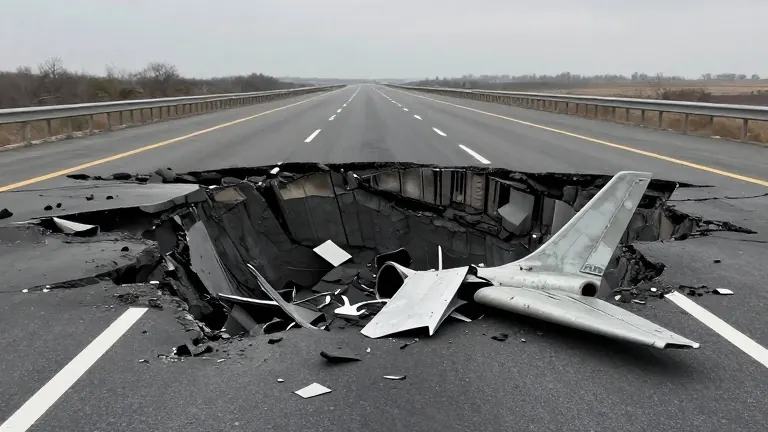
The National Transportation Safety Board has identified a critical anomaly in the wreckage of the private jet that crashed in Palm Beach, Florida. NTSB board member Tom Chapman announced on Tuesday that major components of the aircraft's left elevator were recovered between 1.3 and 3.8 miles from the crash site.
Chapman stated that investigators found the majority of the left elevator in three separate pieces. Because these parts were located a considerable distance from the main debris field, the board concluded they separated from the fuselage prior to impact. The left elevator is the control surface responsible for managing the vertical movement of the aircraft's nose.
This discovery is a primary focus of the ongoing inquiry. Chapman explained that knowing the part was lost early in the flight directs investigators toward specific mechanical or structural failures. The board is currently analyzing whether the loss of the elevator caused the plane to nosedive or if aerodynamic forces caused the part to detach.
Chapman noted that the control surface may not have been effective at the speeds the plane was traveling. The Learjet 60 was en route from Austin, Texas, to the Bahamas when it descended into a multi-lane highway and exploded upon impact. All nine people on board were killed.
Air traffic control recordings capture the cockpit crew reporting moderate turbulence and managing ice accumulation. The audio indicates the crew was picking up precipitation and attempting to climb. Moments later, the descent rate reached 10,000 feet per minute.
The pilots then reported an overspeed condition with a descent rate of 20,000 feet per minute. The recordings end with a statement that the aircraft was going to crash into the ground. The NTSB is investigating the role of weather in the event while dealing with access challenges caused by the large crater formed in the road.
The victims included pilot Jeffrey Gregory, 55, and co-pilot Nathalia Filgueiras, 20. The seven passengers were tech entrepreneur Adam Robinson, his wife Helen Sharp, their children Emma and Charlie, friends Rachael Reed and Charmi Fehr, and nanny Anita Maria Cetina.