Voters face state-level climate tests as federal focus shifts to economy and Iran
With 35 Senate seats and all 435 House seats up for grabs, analysts predict local elections and ballot measures will drive environmental policy more than national legislation.
By Anthony Lawson ·

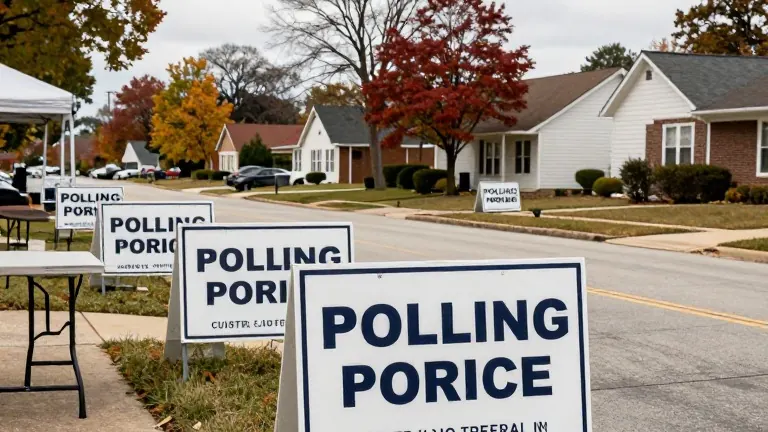
American voters are preparing to decide the fate of 435 House seats and 35 Senate seats on Tuesday, Nov. 3. While the economy, health care, and the war in Iran currently dominate public concern, the election cycle is testing the viability of state-level environmental strategies. Democrats must secure a net gain of four seats to control the Senate, a threshold that could influence the pace of federal regulatory changes.
The midterms occur against a backdrop of federal retreat from climate commitments. During the first two years of the current administration, the United States withdrew from the Paris Agreement, reversed the landmark endangerment finding, and expanded leases for oil and gas drilling on public lands. Malcolm Araos, an assistant professor at the Wagner School of Public Service at New York University, notes that a new government might not reverse these actions immediately, but it could investigate the reversals and prevent similar moves in the future. He describes the potential shift as a way to stop the bleeding.
Because federal action remains uncertain, environmental advocates are directing attention to state races. Geoffrey Henderson, an assistant professor of environmental policy and planning at the University of Michigan, points to the strategic value of state-level Democratic trifectas. When a party controls the governorship and both legislative chambers, states have historically passed major climate laws. Henderson cites Michigan as a state that could shift back to this configuration, unlocking policy changes that are often overlooked in national debates. Since the current president took office, California, Virginia, and Colorado have advanced climate policies despite federal rollbacks.
Ballot measures in several states will serve as direct tests of public appetite for environmental regulation. In Colorado, Amendment 82 asks voters to approve a constitutional right to buy and sell natural gas. Critics argue that passing the measure could hinder state climate goals by entrenching fossil fuel reliance. In Michigan, a separate measure seeks to limit the political influence of utility companies, a group that has previously lobbied against community solar expansion. In Eugene, Ore., voters will consider a tax on large corporate retailers to fund climate resilience projects, a model similar to a program adopted in Portland in 2018.
Two additional issues may shape the outcome. The war in Iran has exposed the fragility of fossil fuel supply chains, potentially accelerating the shift toward renewable energy for security purposes. Araos suggests that energy crises often force a switch to renewables. Simultaneously, voters in 10 states, including California, Kansas, and Ohio, are deciding whether to restrict data center construction. Henderson notes that data centers are major consumers of energy and water, creating a bipartisan grassroots opposition. This issue offers climate groups an opportunity to join a wider coalition focused on local land use and costs.