Voters turn out in record numbers as Israel waits for election results
Exit polls show no party bloc secured the 61 seats needed to govern, leaving weeks of negotiations ahead.
By Anthony Lawson ·
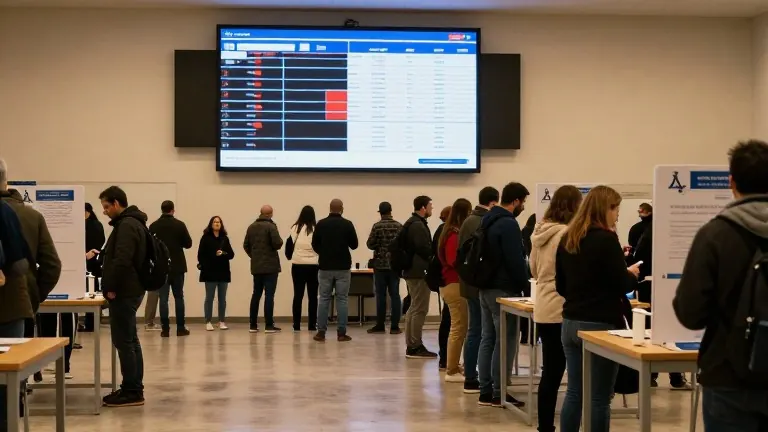
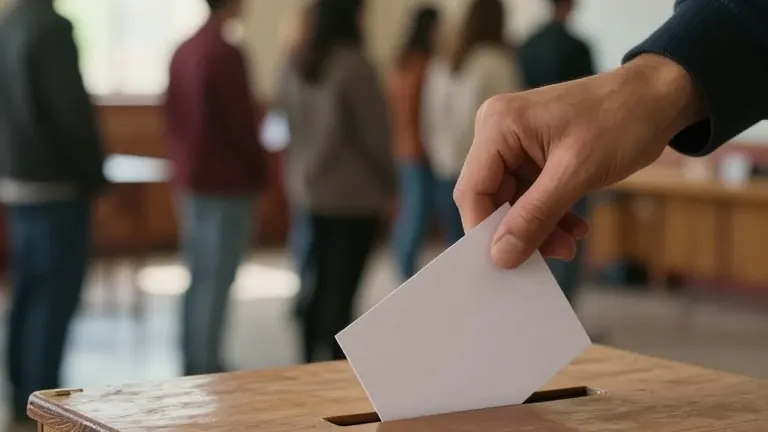
By 8 p.m. local time on Tuesday, 74.3% of eligible Israelis had cast ballots, a figure eight percentage points higher than at the same hour in the 2022 election. The Central Elections Committee reported that this turnout level was the highest recorded since 1988. Voters faced a choice between the bloc of Prime Minister Benjamin Netanyahu and that of his main rival, former military chief Gadi Eisenkot. Neither camp appears to have secured the 61 Knesset seats required for a majority, according to exit polls released by major television stations.
The election serves as a direct referendum on Netanyahu’s leadership following the October 7, 2023, Hamas attack and the subsequent wars. With no single party ever winning a majority in the 120-member parliament, the result will require alliances among roughly a dozen parties. This likely sets off weeks of negotiations before a new leader is declared. Preliminary results are expected in the coming hours, while final counts may take days and could vary from the exit poll numbers.
In central Israel, activists for the far-right Otzma Yehudit party watched the results with stunned silence. Exit polls suggested their leader, Public Security Minister Itamar Ben-Gvir, would capture only six or seven seats. This falls short of the 14 seats the party and its ally Religious Zionist won in the previous election. Ran Levy, a Ben-Gvir activist since age 18, said he hoped the polls were wrong but acknowledged the need for realism. He noted that exit polls can change, though he felt the current numbers were difficult to ignore.
Netanyahu framed the final hours of voting as a struggle for the country’s future. In a video posted to social media, he urged supporters to call family and neighbors to vote, claiming his coalition could lose control if turnout dropped. He described the race as a war for their home. Eisenkot countered with a statement urging voters to choose enlistment over draft evasion. The former military chief lost his son and two nephews in the Gaza war and made the exemption of ultra-Orthodox men from service a central campaign issue.
Supporters of the Joint List of Arab parties hoped high turnout in their communities would help unseat Netanyahu. Former lawmaker Osama Saadi praised the high participation among both Jewish and Palestinian citizens. He urged supporters to vote until the 10 p.m. cutoff. The Joint List campaigned against the war in Gaza and West Bank settlements, positions that may complicate coalition building. However, party leaders signaled they might support a government led by Netanyahu’s opponents from outside if necessary.
The Central Elections Committee denied a request by Likud and other right-wing parties to extend voting past 10 p.m. The committee stated that current circumstances did not justify an extension and that all voters in line by the cutoff could cast ballots. They noted that high nationwide turnout reflected strong public engagement. Eisenkot’s camp called the extension request a ploy to challenge the election results later. They argued no exceptional incident occurred to warrant the change.
In Tel Aviv, residents used the national holiday to gather in parks and cafes before weather forced them indoors. More than 90,000 people visited national parks, though flooding in the south closed several sites. Gal Elian, a 28-year-old architect, joined a group recruiting for a women’s beach footvolley team. She said she hoped for real social and economic change, noting that her entire family votes for Netanyahu. She felt she needed to vote for whichever party could remove him from power.
Ofer Kenig, a research fellow at the Israel Democracy Institute, said the high turnout in liberal areas and Arab-majority villages looks encouraging for the opposition bloc. He warned that small parties might struggle to pass the electoral threshold, which would waste votes for their allies. Hanna Swaid, a former Knesset member and Palestinian Christian, attributed the record turnout to four years of anger toward Netanyahu. She noted that Palestinian citizens make up slightly more than one-fifth of the population, though their parties have never won proportional representation.