Governor races: 18 to 18 split and nine battlegrounds define 2026 map
Voters in the Great Lakes and Ohio Valley face open seats and a critical push for Democratic control of statehouses.
By Rafael Bailey ·
The 2026 midterm election presents a balanced starting line for the governor's mansion, with Republicans and Democrats each holding 18 of the 36 offices on the ballot. This parity means that a net gain of just two governorships for the Democratic Party would secure a nationwide majority, a position they have not held since 2010. For Republican voters in the Great Lakes and Ohio Valley, the primary objective is to maintain the status quo and prevent a historic shift in state executive power.
Nineteen of these races are open seats, meaning no incumbent is on the ballot. Fifteen governors are term-limited, while others have chosen not to run or lost their primaries. Notable absences include Iowa's Kim Reynolds, Minnesota's Tim Walz, and Wisconsin's Tony Evers, who decided not to seek another term. Rhode Island's Daniel McKee also left the race after losing his primary. This high volume of open seats creates uncertainty but also opportunity for challengers to redefine local leadership.
Ballotpedia identifies nine specific governor's races as battlegrounds: Alaska, Arizona, Georgia, Iowa, Kansas, Michigan, Nevada, Ohio, and Wisconsin. In the Great Lakes region, both Michigan and Wisconsin are key contests. In Michigan, polls are open from 7 a.m. To 8 p.m. Local time. The state has an open governor's seat because the incumbent is not running. Voters there are also choosing a U.S. Senator in an open seat, a race where Trump won by 1.4 percent in 2024.
Ohio, another critical state in the Ohio Valley, has polls open from 6:30 a.m. To 7:30 p.m. The governor's race there is considered a battleground. The AP highlights the matchup between Republican Vivek Ramaswamy and Democrat Amy Acton. Ramaswamy's campaign has faced attention for an advertisement featuring Acton's estranged mother. Ohio also features a special U.S. Senate election, where Republican Sen. Jon Husted is running against Democrat Sherrod Brown. The 2024 presidential margin in Ohio was Trump plus 11.2 percent.
Wisconsin, with polls open from 7 a.m. To 8 p.m., is the third battleground in this regional cluster. The state had an open governor's seat following Tony Evers' decision not to run. Democrats are defending five governorships in states that Trump won in 2024, including Michigan and Wisconsin. Republicans are defending two governorships in states that Harris won, New Hampshire and Vermont. This dynamic requires Republicans in the Great Lakes to defend their existing advantages while attacking open seats.
The mood among voters is shaped by economic concerns. The Associated Press reports that 35 percent of U.S. Adults approve of Trump's job performance, while only 25 percent approve of his handling of the economy. About seven in 10 adults say the country is heading in the wrong direction. In the Great Lakes, these national sentiments intersect with local issues like the cost of living and border security. Republicans are bracing for potential losses in the House but are fighting to hold the Senate, where they can lose only two seats to maintain control.
In Kentucky, which borders the Ohio Valley, polls are open from 6 a.m. To 6 p.m. There is no governor's race this cycle, as the office is not up for election. However, Kentucky has an open U.S. Senate seat. The state voted for Trump by a margin of 13.2 percent in 2024 provided for the Iowa race, though Kentucky's specific margin is not listed in the battleground list. The absence of a governor's race allows voters to focus on the Senate, where the outcome could influence regional policy priorities.
West Virginia, also in the broader Ohio Valley region, has polls open from 6:30 a.m. To 7:30 p.m. There is no governor's race in West Virginia this cycle. The state is holding a U.S. Senate race with incumbent Shelley Moore Capito on the ballot. The AP notes that Republicans were bracing to lose the House, and one or two seats could tip either chamber. In West Virginia, the focus is on keeping the Senate seat, as the incumbent is running for re-election in a state that leans Republican.
The financial aspect of these races is significant. The 2026 elections are likely to be the most expensive in history. Republican committees have outraised and outspent Democratic committees, aided by Trump-affiliated groups and Elon Musk. However, at the candidate level, Democrats have outraised their opponents. Eighty-eight.1 percent of Republican general election TV ad spending went to states and districts Trump won in 2024. In the Great Lakes, this spending is concentrated in competitive districts where the margin of victory was narrow.
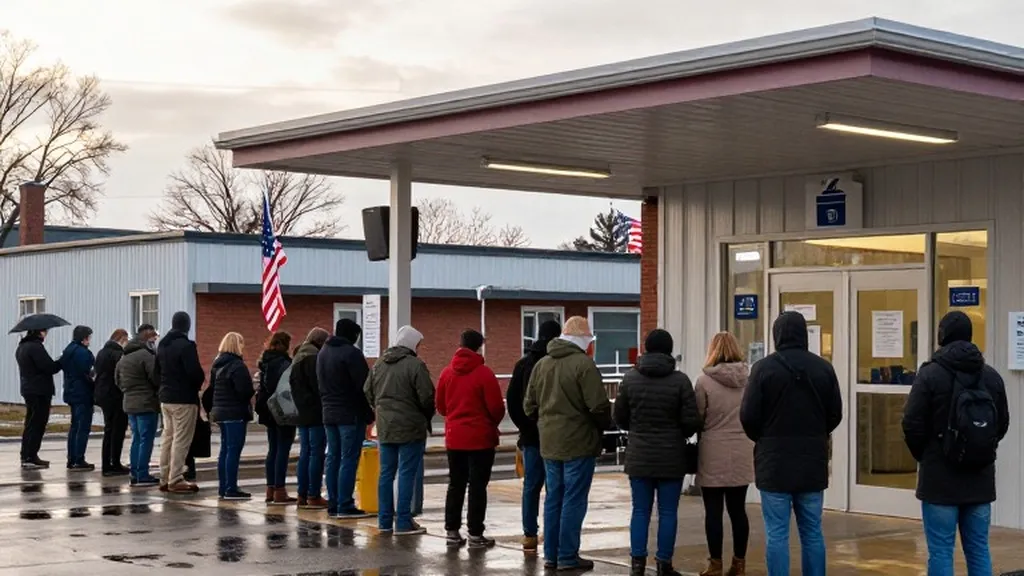
Voters in these regions are heading to the polls with a clear understanding of the stakes. In Ohio, Michigan, and Wisconsin, the combination of open governor's seats and competitive Senate races creates a high-pressure environment. The AP describes the election as a referendum on Trump's second term, with voters struggling with high prices. For Republicans, the goal is to keep their majority in the governor's offices and maintain Senate control. For Democrats, the opportunity is to flip the balance of power in statehouses for the first time in two decades.
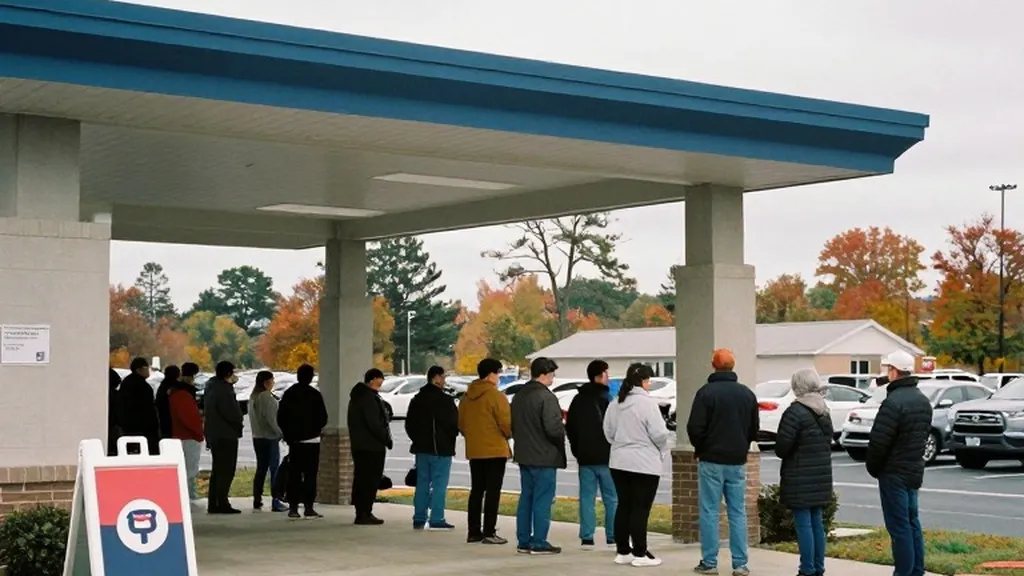
As polls close in the Great Lakes and Ohio Valley, the final tally of early votes and Election Day turnout will determine the direction of state leadership. More than 57 million people had already voted as of Monday, surpassing early vote totals from four years ago in many closely watched states. The results of these 36 governor's races will shape the political landscape for the next four years, influencing policy on the economy, border security, and local governance. The balanced start of 18 to 18 underscores the importance of every vote in these battleground states.