Senate 2026: 35 seats, 13 battlegrounds, and the path to majority
With polls open across the Great Lakes and Ohio Valley, Republicans need to lose no more than two seats to keep control, while Democrats fight for a net gain of four in a tightly contested race.
By Anthony Lawson ·
Voters across the Great Lakes and Ohio Valley are casting ballots on Tuesday, November 3, 2026, in the midterm election that will determine control of Congress for the final two years of President Donald Trump's second term. 35 of the 100 Senate seats are up for grabs, comprising 33 regular elections and two special elections. The special elections are for the remainder of the terms held by Marco Rubio in Florida and JD Vance in Ohio. The outcome of these contests is critical because it dictates which party holds the legislative agenda for the remainder of the administration's tenure.
Republicans currently hold 53 Senate seats, while Democrats hold 45, with two independents who caucus with the Democratic Party. To secure a majority, Democrats need a net gain of four seats. Conversely, Republicans can afford to lose only two seats to maintain their current control. The Associated Press notes that the election is being viewed as a referendum on the president's performance, with many voters expressing frustration over high prices and an unpopular war with Iran. The AP-NORC poll indicates that 35 percent of U.S. Adults approve of Trump's job performance, and about seven in 10 say the country is heading in the wrong direction.
Thirteen Senate races are rated as battlegrounds. These include open seats and contests where the incumbent is defending a term in states that voted for either President Trump or Vice President Kamala Harris in 2024. In the Great Lakes region, Michigan and Ohio are particularly significant. Michigan has an open Senate seat following the retirement of Gary Peters, and the state voted for Trump by a margin of 1.4 points in 2024. Ohio is holding a special election for the seat formerly held by JD Vance, where Republican Jon Husted is defending the position in a state that Trump won by 11.2 points.
Other battleground states in the region include Kentucky, which has an open Senate seat and no governor race. Polls in Kentucky open at 6:00 a.m. And close at 6:00 p.m. Local time. West Virginia is also part of this regional focus, with incumbent Republican Shelley Moore Capito seeking re-election. Polls in West Virginia open at 6:30 a.m. And close at 7:30 p.m. In Ohio, polls open at 6:30 a.m. And close at 7:30 p.m. The AP highlights that Kansas, a traditionally Republican state, has become central to the fight for Senate control, with the race rated as a toss-up to lean Republican by major polling organizations.
Nationally, the battleground list includes Alaska, Florida, Georgia, Iowa, Kansas, Maine, Michigan, Montana, Nebraska, New Hampshire, North Carolina, Ohio, and Texas. Ratings as of October 27 from Cook, Decision Desk, Inside Elections, and Sabato vary, with Maine listed as a toss-up on all four scales. Georgia and Alaska are seen as leaning Democratic, while Iowa and Kansas are seen as leaning Republican. The AP notes that in North Carolina, former Governor Roy Cooper is challenging former Republican National Committee chair Michael Whatley for the seat of retiring Senator Thom Tillis. In Georgia, Senator Jon Ossoff is facing Representative Mike Collins.
More than 57 million people had already voted as of Monday, surpassing early vote totals from four years ago in many closely watched states. Republican National Committee Chairman Joe Gruters stated that everything depends on turnout, asserting that if Republicans turn out their voters, they will win. In contrast, Democratic Congressional Campaign Committee Chair Suzan DelBene said the American people are angry and want change. The AP notes that one or two seats could tip the balance in either chamber, making the race for control extremely close.
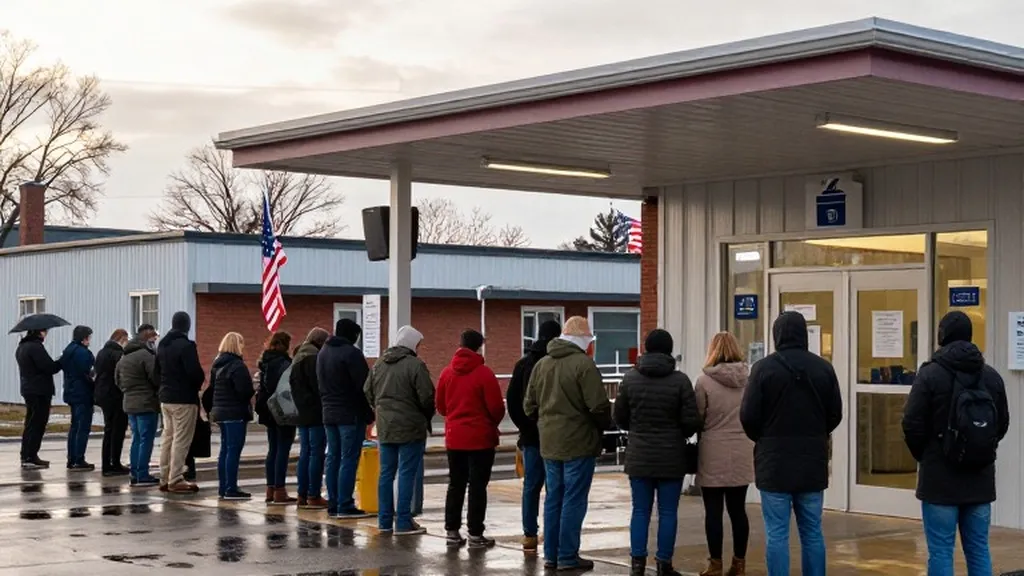
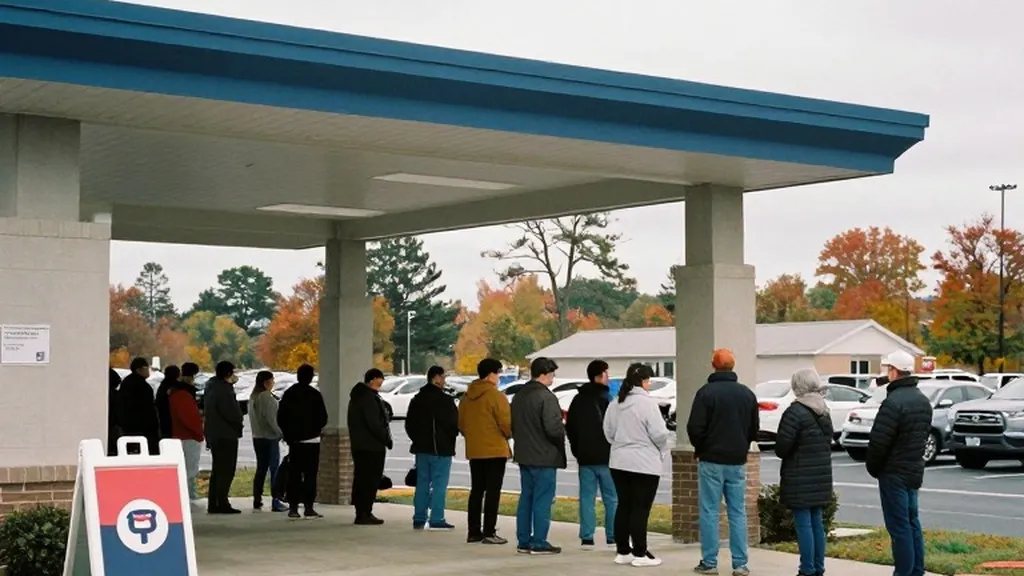
Election administration has been a point of contention, with Reuters reporting that a federal judge temporarily barred the Trump administration from carrying out a plan to prevent noncitizen voting. Critics argue this risks disenfranchising eligible voters and infringes on state authority. The U.S. Postal Service has added hours and staff to ensure mail ballots are counted on time. In the Great Lakes region, voters in Michigan have until 8:00 p.m. To cast their ballots, while those in Ohio and West Virginia have until 7:30 p.m. Anyone in line when polls close is entitled to vote.
Financially, the 2026 elections are likely to be the most expensive in history. Republican committees outraised and outspent Democratic committees, aided by Trump-affiliated groups and Elon Musk. However, at the candidate level, Democrats outraised their opponents. The AP analysis of AdImpact data shows that 88.1 percent of Republican general election TV ad spending went to states and districts Trump won in 2024. This spending strategy reflects the party's focus on defending its base while attempting to win back key swing states.
The stakes extend beyond the Senate. If Democrats win even one chamber, investigations and possible impeachment proceedings become likely. House Democratic Leader Hakeem Jeffries has outlined a 100-day agenda focused on the cost of living and oversight, and would be the first Black speaker if his party takes control. A strong Democratic night would also boost potential 2028 candidates such as Gavin Newsom, JB Pritzker, and Pete Buttigieg. Republicans have tried to beat the midterm pattern of seat losses through redistricting, but new districts in states like Florida and Ohio may not vote as drawn.
In the Ohio Valley, voters in Kentucky are deciding the fate of an open Senate seat, with polls closing at 6:00 p.m. In West Virginia, Incumbent Shelley Moore Capito is running for re-election in a state that voted heavily for Trump. The AP notes that economic strain and tariffs have made states like Maine competitive, where Senator Susan Collins is facing a challenge from Democratic former state Senate President Troy Jackson. As polls open and close throughout the day, the final tally of these 35 seats will determine the legislative landscape for the next two years.