Trump's Rally Tour and the Midterm Distance in the Great Lakes
As polls open in Ohio and Michigan, the President's recent rallies and economic approval numbers shape the mood for voters deciding on open Senate and governor seats.
By Carlos Rousseau ·
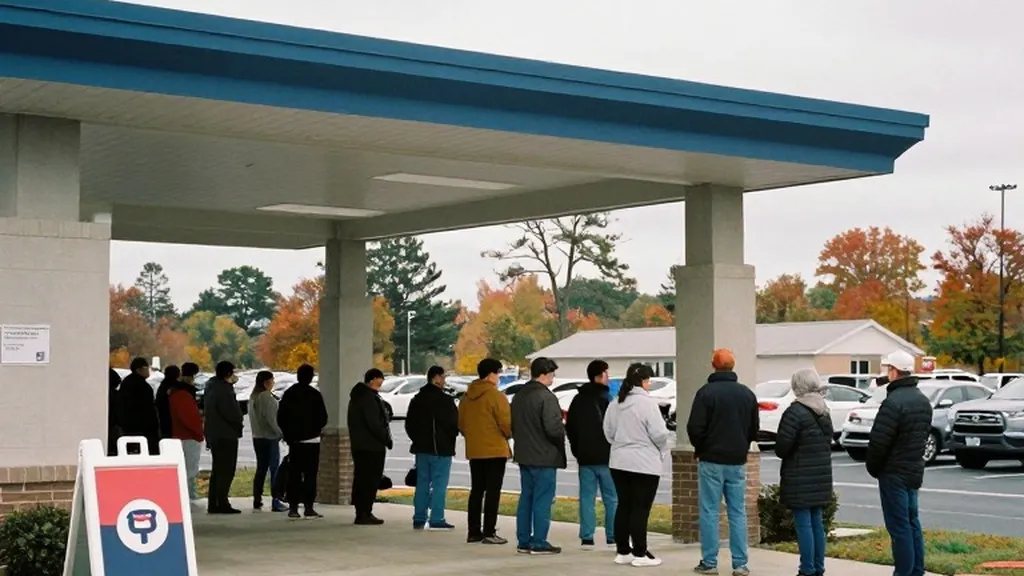
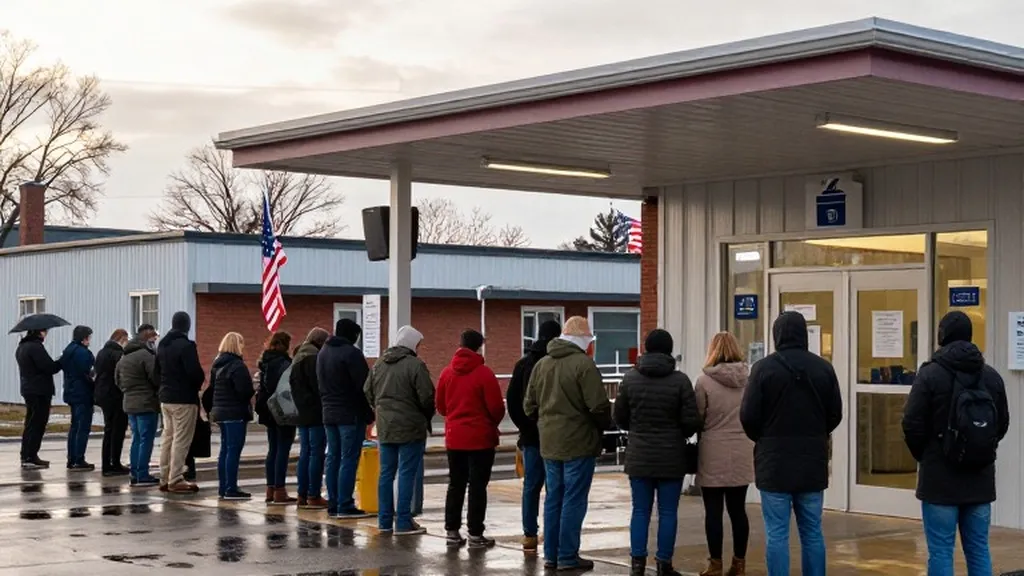
The midterm election is underway on Tuesday, November 3, 2026, marking the halfway point of President Donald Trump's second term. Voters across the nation are casting ballots to determine which party will control Congress for the remaining two years of the administration. In the Great Lakes and Ohio Valley region, the stakes are particularly high as citizens decide on open Senate seats and gubernatorial races. The Associated Press describes this election as a referendum on the President's performance, with voters expressing frustration over high prices and an unpopular war with Iran.
President Trump has been actively campaigning throughout the country, holding dozens of rallies to support Republican candidates. His schedule included stops in Mississippi, South Carolina, and Texas, culminating in a rally in Salina, Kansas, on Sunday. At that event, the President urged supporters to engage with the local races by saying, "I really want you to pretend I'm on the ballot." This strategy aims to transfer his personal brand of approval to the candidates on the ballot, even though he is not running for office again in this cycle.
Despite the President's energetic campaign, many Republican candidates have kept a careful distance from him in their own messaging. This strategic separation reflects the complex political dynamics at play, as candidates seek to balance the President's influence with their own local appeal. In Ohio, the race for governor features Republican Vivek Ramaswamy against Democrat Amy Acton. Ramaswamy's campaign has faced some backlash over an advertisement that featured Acton's estranged mother, a moment that highlighted the intense scrutiny on both parties in this open seat.
The economic climate is a central theme for voters in this region. 35% of U.S. Adults approve of Trump's job performance, while only 25% approve of his handling of the economy. Approximately 7 in 10 respondents say the country is heading in the wrong direction, with most blaming the President for high prices. In Michigan, polls are open from 7 a.m. To 8 p.m. For a decisive open Senate seat. The race pits Republican former Representative Mike Rogers against Democrat Abdul El-Sayed. Notably, El-Sayed's former primary opponent, Haley Stevens, endorsed Rogers on Sunday, adding another layer to the competitive dynamics in the state.
Kentucky voters are heading to the polls from 6 a.m. To 6 p.m. To decide an open Senate seat. The state is part of a broader pattern where the President's presence influences voter sentiment, even when he is not on the ballot. In West Virginia, polls are open from 6:30 a.m. To 7:30 p.m., where incumbent Senator Shelley Moore Capito is running for re-election. The President's continued claims about voting fraud have also played a role in the election atmosphere. He has asserted that noncitizens vote in large numbers, a claim that has led his administration to file lawsuits in Alaska and California. These legal actions have raised concerns among Democrats about potential interference and intimidation of local election officials.
Turnout remains a critical factor for both parties. RNC Chairman Joe Gruters stated that everything depends on getting out the vote, emphasizing that if Republicans turn out their voters, they will win. Conversely, DCCC Chair Representative Suzan DelBene noted that the American people are angry and want change. More than 57 million people had already voted by Monday, surpassing the early vote totals from four years ago in many closely watched states. This early surge suggests a high level of engagement that could shape the final outcome in key districts and states.
In Ohio, there is no Senate race, but the governor's office is up for grabs in an open seat. The state also uses a new congressional map, which adds a variable to the House races. Republicans currently hold 218 House seats, while Democrats hold 214, with one independent and several vacancies. Democrats need a net gain of three districts to take the majority, while Republicans can lose no more than two. The new maps in states like Ohio, along with redistricting in other regions, are expected to impact how these seats are contested.
The financial resources behind the campaigns are also unprecedented. The 2026 elections are likely to be the most expensive in history, with Republican committees outspending their Democratic counterparts at the committee level. This spending was aided by Trump-affiliated groups and Elon Musk, although Democrats outraised their opponents at the candidate level. An analysis of AdImpact data found that 88.1% of Republican general election TV ad spending went to states and districts that Trump won in 2024. This targeted approach underscores the importance of holding onto the President's base of support in areas like the Great Lakes.
As polls open in Michigan, Ohio, Kentucky, and West Virginia, voters are making their choices in a landscape defined by economic concerns and political uncertainty. The results will determine the balance of power in Congress and influence the trajectory of the administration's final two years. For now, the focus remains on the act of voting itself, with millions of citizens exercising their right to shape the future of their representation in Washington.
The election administration has been a point of focus, with a federal judge temporarily barring the Trump administration from a plan to prevent noncitizen voting. Critics argue this risks disenfranchising eligible voters, while the administration maintains it is ensuring election integrity. The U.S. Postal Service has added hours and staff to ensure mail ballots are counted on time, a crucial step in a year where mail-in voting remains a significant component of the process. Wall Street is also watching these elections closely, as the results could impact investor confidence regarding AI spending and debt ceiling negotiations.